Operational QMS + Targeted PD as lines of Defence Against Non-Compliances
The data is unambiguous. In 2024–25, ASQA found non-compliance in 78% of performance assessments (221 of 284). Enforcement also escalated: written directions hit 192, suspensions spiked to 34, and cancellations/rejections reached 138 decisions affecting 87 providers. Meanwhile, warning letters surged to 318. Together, this is a decisive pivot from education-first nudges to consequence-led regulation.
And the human and reputational cost? More than 25,500 qualifications and statements of attainment were cancelled and had to be returned—a sector-wide trust shock that ricochets through students, employers, and RTO brands. ASQA also notes it may pursue civil penalties against individuals who keep using cancelled credentials.
The cost of non-compliance
For students:
- Stranded credentials. Revoked qualifications translate to lost time, sunk fees, and disrupted employment and licensing pathways—especially acute for international students whose visa status can be impacted by study interruptions or invalid awards. The scale—25,500+ credentials cancelled in a year—is not incidental; it’s systemic.
- Opportunity cost and uncertainty. Re-enrolment, recognition of prior learning do-overs, and job offer delays compound financial stress.
- Legal exposure. Continued use of a cancelled qualification risks civil penalties.
For RTOs:
- Brand equity erosion. Public cancellation and suspension decisions reverberate through employers and agents; recoding your brand from “trusted” to “high-risk” can take years to unwind.
- Revenue and cost shocks. Teach-out, refunds, litigation exposure, and financial issues from paused intakes.
- Regulatory capital drag. Post-incident recovery consumes executive bandwidth and audit capacity, weakening growth execution.
What’s changed
ASQA’s toolkit usage has shifted. Warning letters surged to 318 in 2024–25, written directions rose to 192 (up from 91 the prior year), while suspensions (34) and cancellations/rejections (138) stepped up—evidence of a firmer appetite to escalate when capability or commitment is lacking.
Implication: paper-based policies won’t cut it. Providers need operational quality—controls that fire at the point-of-work, not in the quarterly audit.
The strategic hedge: an operationally-oriented QMS that helps users complete tasks (and proves it)
A high-maturity QMS is a work engine, not a document library. The brief is simple: make the compliant path the fastest path.
Design principles that move the needle:
- Role-based workflows. Trainers, assessors, compliance, student services—each sees the next right step, the artefact to upload, and the acceptance criteria.
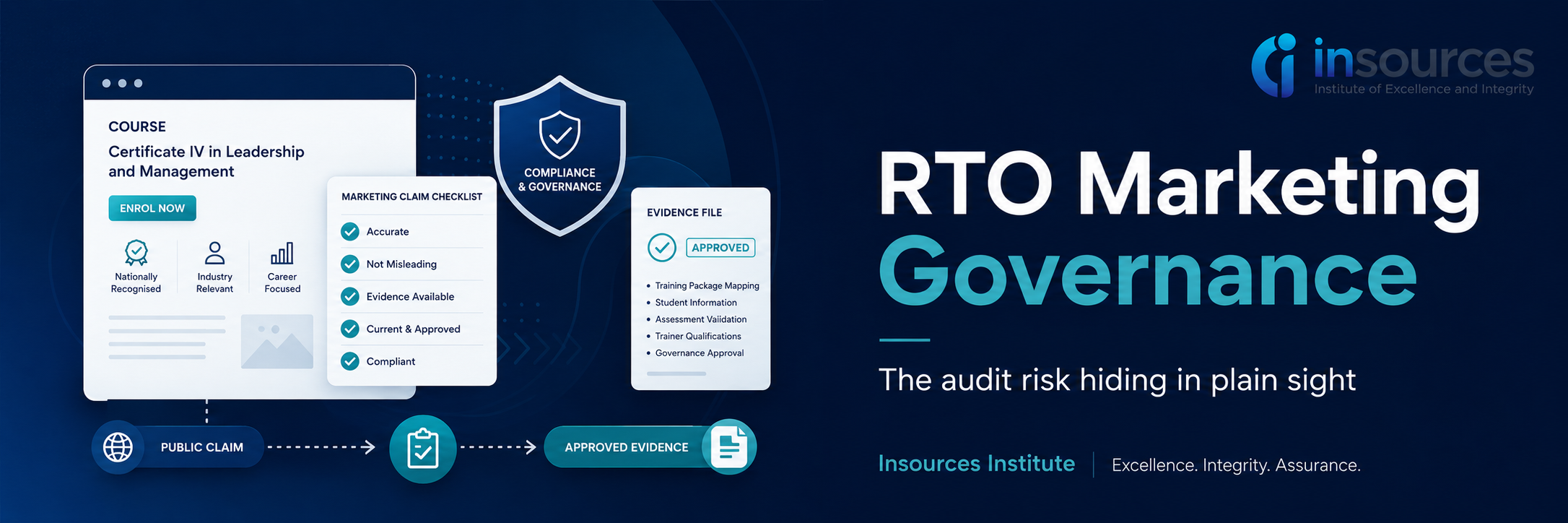
- Hard guardrails. Prevent certificate release until unit outcomes, assessor credentials, moderation/validation, and evidence sufficiency checks pass. Tie this to risk areas where ASQA is actively cancelling quals.
- Embedded clause mapping. Link each step to the exact requirement (e.g., certification controls) and require proof-of-effectiveness, not just completion.
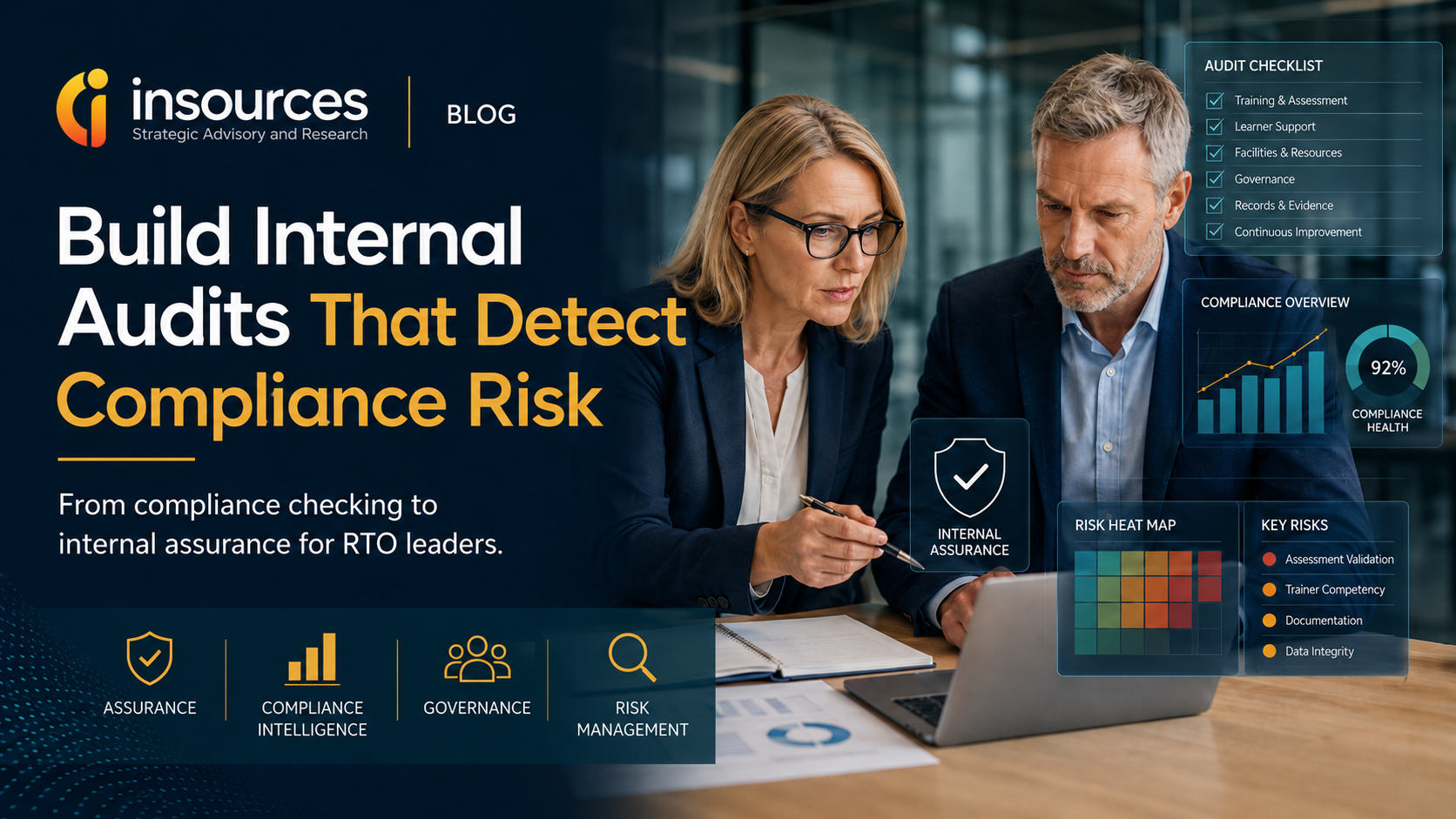
- Real-time risk telemetry. Dashboards tracking assessment quality, certificate issuance lead times, attendance anomalies, and complaints—so you detect drift before it becomes a finding.
- ATR-ready remediation. When non-conformance occurs, auto-generate a corrective-action plan with actions, evidence, and timeframes to demonstrate return-to-compliance on demand.
Run this systemand you materially reduce the probability of landing in the 78% non-compliance cohort and the enforcement crosshairs.
Capability is a control: targeted professional development (PD)
Tools don’t self-execute. You need human capability uplift—focused where ASQA’s pain points are hottest:
- Assessment integrity and evidence. Design valid tasks, apply rules of evidence, make consistent competency judgements, and document assessor decisions—precisely where ASQA has cancelled registrations and then cancelled issued qualifications.
- CRICOS compliance and student protections. Attendance monitoring, recruitment/marketing discipline, and timely s19 reporting—areas under intensified monitoring.
- Complaint-to-improvement loop. Systematically resolve training/assessment quality issues and certificate delays, then feed root causes into process changes (closing the signal loop that drives reputational outcomes).
Make PD a quarterly cadence—small, targeted sprints with pre/post measures surfaced on the QMS dashboard—to convert learning into visible risk reduction.
Execution blueprint
- Prioritise the top 12 regulatory-weight tasks (assessment, certification, marketing approvals, third-party monitoring) and operationalise them as guided workflows with embedded checks.
- Instrument your controls with clause links, acceptance criteria, and evidence lockers; block risky actions automatically.
- Wire complaints, validations, and audit observations straight into corrective actions—ATR-style, time-boxed, and evidenced.
- Publish leading indicators (assessment quality, issuance lags, CRICOS anomalies) so leaders and auditors see the same truth.
Bottom line
The sector is in a trust recalibration. With 25,500+ qualifications cancelled, a 78% non-compliance rate in risk-based assessments, and a clear enforcement hardening (318 warning letters; 192 written directions; 34 suspensions; 138 cancellations/rejections), the only sustainable play is to operationalise quality and professionalise capability. That combination protects students, preserves brand equity, and gives you a defendable narrative with the regulator—every day, at the point of work.
Work with Insources Group and Insources Institute (RTO 30122, registered since 2000) for end-to-end enablement: our RTO Quality Management System, the RTO Compliance Bootcamp Week, weekly professional-development webinars, and independent internal audit services. Together, these solutions operationalise the Standards at the point of work, uplift capability, close assurance gaps, and safeguard student outcomes and brand reputation.