In my over 20 years of experience as an RTO CEO, manager, and consultant, I have observed firsthand that successful vocational education and training providers consistently demonstrate a clear understanding of their workforce’s strengths and developmental needs. A structured approach to workforce capability is no longer optional—it is essential for ensuring sustainable growth, compliance, and organisational excellence.
At Insources, we have developed the RTO Workforce Capability Framework as part of the RTO Quality Management System (QMS) to strategically manage and cultivate our workforce’s competencies. This framework is instrumental in identifying skill gaps, aligning individual professional development initiatives with organisational objectives, and ensuring the RTO is proactive and prepared to address future trends and challenges.
Understanding the RTO Workforce Capability Framework
The Insources Workforce Capability Framework structures competencies into three primary domains, each critically important for the effective functioning and continuous improvement of an RTO:
- Core Capabilities. These foundational competencies are vital across all roles within the RTO. They include interpersonal skills and behaviours such as effective communication, collaboration, adaptability, and ethical conduct. Core capabilities contribute significantly to fostering a positive organisational culture and enhancing teamwork and stakeholder engagement.
- Professional Capabilities. Professional capabilities define the specific skills, qualifications, knowledge, and experiences necessary for staff to perform their roles effectively. These role-specific capabilities ensure that each team member can meet their responsibilities efficiently, consistently delivering quality educational outcomes and operational excellence.
- Organisational Capabilities. Organisational capabilities are collective competencies and behaviours that drive organisational performance, productivity, and operational effectiveness. They are strategically assessed at an organisational level and are supported by behaviours integrated within core and professional capabilities, ensuring alignment with compliance requirements and broader organisational objectives.
The Organisational Capabilities Maturity Levels
To effectively measure and improve our organisational capabilities, we use a clearly defined maturity model with five progressive levels:
- Level 1: Initial – Processes are ad hoc, undefined, and typically reactive.
- Level 2: Managed – Processes are planned, monitored, and consistently tracked.
- Level 3: Defined – Processes are standardised, clearly characterised, and well understood.
- Level 4: Quantitatively Managed – Processes are systematically measured, controlled, and analysed for effectiveness.
- Level 5: Optimising – Processes focus on continuous improvement, innovation, and adaptive strategies to maintain competitive advantage.
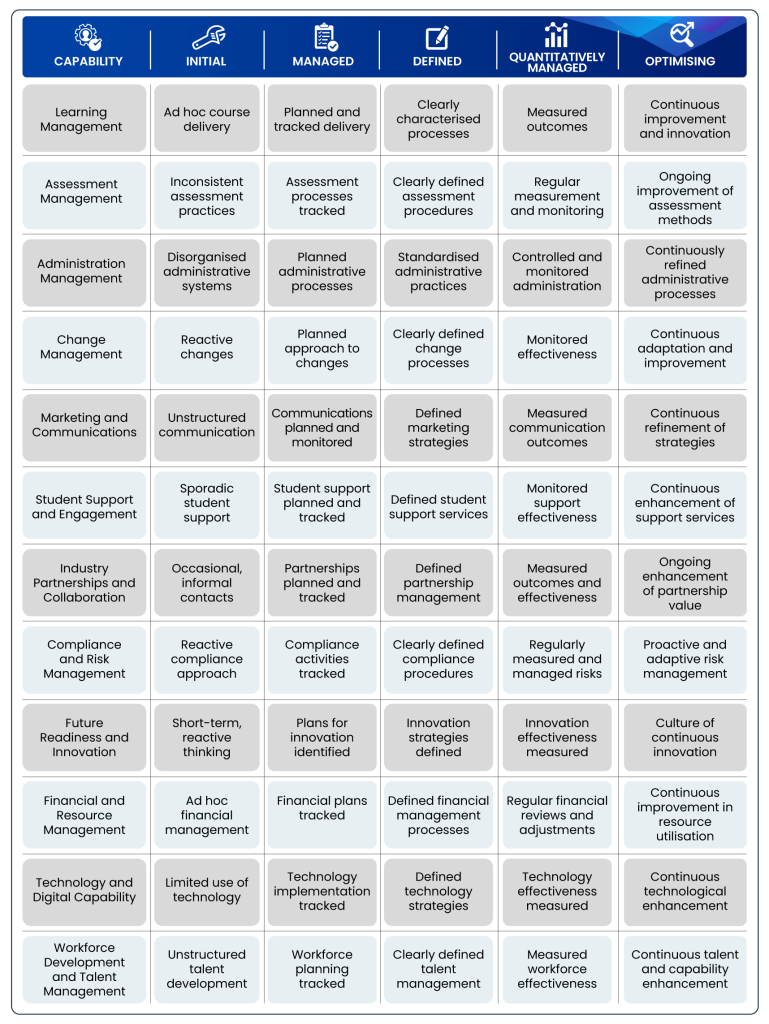
The Insources RTO Workforce Capability Framework outlines specific organisational capabilities such as Learning Management, Assessment Management, Compliance and Risk Management, Technology and Digital Capability, and Workforce Development. Each capability is evaluated against these maturity levels, offering a clear and actionable pathway toward continuous improvement.
Application and Benefits
The framework’s structured approach provides our RTO with significant advantages:
· Strategic Alignment: Ensures that workforce skills development directly contributes to organisational strategic goals and compliance obligations.
· Clear Development Pathways: Provides a transparent roadmap for staff, fostering engagement, motivation, and retention.
· Continuous Improvement: Facilitates regular assessment and enhancement of organisational practices, ensuring adaptability and resilience in a rapidly evolving vocational education sector.
A robust Workforce Capability Framework is not merely a tool for organisational efficiency—it is a strategic imperative for any RTO striving for excellence. By embedding the Insources RTO Workforce Capability Framework into your organisational fabric, you position your RTO not just to meet the standards required by regulatory bodies but to lead the way in vocational education and training